Maggie Appleton《数字花园简史》:为什么应该把笔记部分公开
核心问题:你的 vault 永远只给自己看吗?如果公开一部分,该怎么公开 / 公开什么 / 怎么避免变成博客? 核心答案:做一个”数字花园”(digital garden)— 一种非时间序、非完成态、非表演性的公开思考空间。
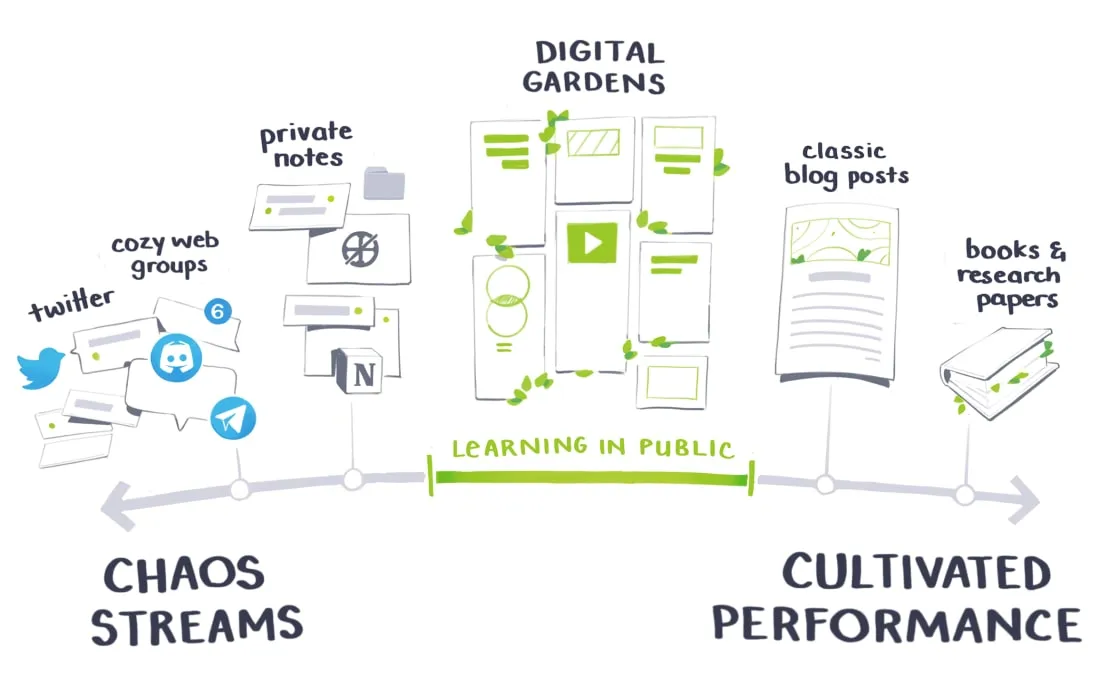 Maggie Appleton 为”数字花园”概念绘制的插图(原图:maggieappleton.com/garden-history,用于评论合理使用)
🔥 影响力卡片
- 作者:Maggie Appleton — 设计师,人类学背景,Anthropic 前产品设计师(MIT Tech Review 2020 报道时把她列为运动主要旗手)
- 核心文章:A Brief History & Ethos of the Digital Garden(2020-2021 持续更新)
- 配套:A Short History of Bi-Directional Links(双向链接思想史,中文圈广泛引用)
- 影响力:Twitter 80k+ 粉;她设计的”6 patterns of gardening”是 digital garden 流派的事实标准定义
- 个人站本身就是 digital garden:maggieappleton.com,分 Essays / Notes / Patterns / Smidgeons / Library / Antilibrary 等多种成熟度
🎯 为什么必读
如果你只把 Obsidian 当私人笔记本,你错过了这两年最有趣的 Obsidian 用法之一:Obsidian Publish + 数字花园。
不是要你做博客 — 数字花园不是博客,这是 Appleton 反复强调的。它是一种新的网络写作形态,Obsidian + Quartz + Obsidian Publish 是当前最主流的三种实现工具。
理解数字花园,你才能想清楚一个问题:你的笔记里哪些应该留在私人 vault,哪些应该长成对话伙伴。
一句话总结
博客是流(stream),花园是地形(topography)。前者由时间组织,后者由想法组织。
公开你的”想法地图”,而不是按时间顺序展示成品。
💎 金句墙
★ “A garden is a collection of ideas, snippets, and resources, written by you and you alone, but available for the public to see and learn from.” “花园是由你独自书写的想法、片段、资源的集合,但公开供他人查看和学习。” —— 🟢 译者点评:这句的关键在 “you alone” + “available to see”。不是合作写作,不是”为读者写”;但也不藏起来。这是 evergreen notes 公开化的折中姿态。
★ “The point of gardening is not just to demonstrate finished knowledge but to show the working process — including the mess.” “花园不是用来展示完成的知识,而是展示工作的过程 — 包括凌乱。” —— 🟢 译者点评:这正是和”博客”分道扬镳的地方。博客有”发表”动作 — 你写完才发。花园没有 — 写到哪发到哪,允许半成品。这对完美主义者来说是解放。
★ “Gardens are explicitly multimedia, with no preference between text, image, animation, video, or interactive doodad.” “花园明确是多媒体的,文字、图片、动画、视频、互动玩具,没有偏好。” —— 🟢 译者点评:Appleton 自己的站点就是这个 — 视觉散文(visual essay)是她标志性产出。这告诉中文 markdown 老用户:花园不必只是文字。Excalidraw、Canvas、Mermaid 都可以是花园原料。
📋 核心精读 — 数字花园的 6 个 patterns
Appleton 把数字花园流派的特征系统化为 6 条:
1. Topography over Timelines(地形超越时间线)
地形(topography):按主题、按概念、按相关性组织,像一张地图 时间线(timelines):按发布时间倒序,博客的默认形态
数字花园主页不显示”最新文章”,而是显示”主题地图”或”重要概念入口”。
🟢 译者点评:这条直接对应 LYT 的 Home Note + MOC 思想。MOC 就是花园的 topography。
2. Continuous Growth(持续生长)
笔记永远不”完成” — 它持续更新、修订、连接。你今年写的某条想法,明年回来再加几句。
每条笔记上显式标注成熟度:Seedling 🌱 / Budding 🌿 / Evergreen 🌳 是 Appleton 推荐的三档分级。
🟢 译者点评:这是给”我笔记不完美不敢发”焦虑的解药。中文圈做内容的人最怕”未完成被人看到”,花园派的回答是:未完成本来就是花园的常态,贴上 Seedling 标签就行。
3. Imperfection & Learning in Public(不完美 + 公开学习)
显式承认你不懂、你在学、你可能错。这种姿态让花园反向吸引同行 — “我也在学这个”的人会找上你。
🟢 译者点评:这条和 evergreen notes 第 5 条”为自己写,无视读者”看似冲突,实则互补 — 你为自己写,但允许别人偷看。Nicole van der Hoeven 的”Doing It in Public”系列是这条的活样本。
4. Playful, Personal, and Experimental(玩心、个性化、实验性)
花园有审美,有怪味。Appleton 自己的视觉散文、Tom Critchlow 的 blogchains、Andy Matuschak 的 stacked notes UI — 每个都是高度个性化的实验。
🟢 译者点评:这一点让中文用户最容易被吓到 — “我没有审美怎么办?”答案是:你的内容选择和组织方式本身就是审美。不必做视觉设计,做你独特的主题地图 + 你独有的注释风格,就是 personal。
5. Intercropping & Content Diversity(混作 + 内容多样)
一个花园里同时有:深度 essay、随手 note、引用 quote、待读 antilibrary、待办 todos、视觉 sketch… 不要为了”风格统一”砍掉某一类。
🟢 译者点评:中文写作圈受”专栏”思维影响深 — “我这个号专写产品”。花园派反对这种纯化。不同类型内容混在一起,反而让你的思考网络变密。
6. Independent Ownership(独立所有权)
自己的域名、自己的服务器、自己的数据。不是 Substack、不是 Medium、不是公众号。
实现工具:
- Obsidian Publish:$8-10/月,直接发布 vault 到自定义域名
- Quartz(免费):基于 Hugo 的 Obsidian 友好静态站生成器
- 11ty / Astro 等:自己搭
🟢 译者点评:Substack 用户的反应通常是”我又不卖订阅,domain 干嘛”。但 Appleton 的论点是:不止是商业,是数据归属。Substack 关停你怎么办?搬迁带不走读者关系。Obsidian Publish 关停你怎么办?数据本来就在你硬盘上。
数字花园 vs 博客 vs Stream — Critchlow 三态隐喻
Appleton 的工作建立在 Tom Critchlow 2018《Of Digital Streams, Campfires and Gardens》 之上,Critchlow 提出网络写作有 3 种形态:
| 形态 | 例子 | 时间属性 | 关系 |
|---|---|---|---|
| Stream(流) | Twitter / 微博 | 极短期,瞬时 | 与公众的对话 |
| Campfire(篝火) | 博客 / Newsletter | 中期,定期发布 | 与一群读者 |
| Garden(花园) | digital garden | 长期,持续生长 | 与自己 + 偶遇者 |
🟢 译者点评:Garden 的对话伙伴是”自己 + 偶遇者”,这是关键。你写花园不是面向粉丝/订户/客户,是面向”将来的自己”和”偶尔搜到这里的陌生人”。这个心态完全不同于运营博客。
中文圈的数字花园实践
中文 PKM 圈对数字花园概念的接受度还在早期阶段。已知的中文数字花园(2026-05 抓样):
- JimmyLv 吕立青(blog.jimmylv.info)— 早期实践者,但形态偏 blog stream
- PKMer(pkmer.cn)— 集体维护的知识库形态,接近”社区花园”
- 个人小站:少数派几位作者(如纯白桔梗)有 Obsidian Publish 站,但流量不大
🟢 译者点评:数字花园是中文 Obsidian 社区下一个增长点。当前主流中文 Obsidian 用户都把 vault 当私人笔记 — 这是被微信/知乎/B 站的”中心化平台”惯性绑住了。Obsidian Publish + 自定义域名是少数派思路。
实操:从你的 vault 走出花园第一步
如果你想试,最低成本路径:
- 挑选 5-10 条你愿意公开的 evergreen notes(标 Seedling 也可以)
- 写一个 Home Note:
hi.md或index.md,简单介绍你是谁 + 几个 MOC 入口 - 选 Quartz(免费):fork Quartz GitHub,把这些笔记 deploy 到 GitHub Pages
- 绑定一个域名(可选,$10/年)
整个过程一晚上能搞定。第一次部署的痛苦门槛降下来,后面只需要”写笔记 + git push”。
🟢 译者总评
- 数字花园不是博客 ≠ 不发表。是发表方式不同 — 不按时间发,按地形发
- 6 条 pattern 不必全做。最重要的是 1(地形)+ 2(持续生长)+ 6(独立所有权)
- Obsidian Publish vs Quartz 选择:有钱选 Publish(零运维),没钱选 Quartz(免费但要 git 操作)
- 中文圈的特殊性:没有数字花园文化基础,你做出来可能短期没人看 — 这是”为自己 + 偶遇者写”的真意。5 年后再看,你会感谢自己
- Appleton 自己的站点是最好的样本。注册个英文阅读时间专门去看一遍 maggieappleton.com,你会被启发
附录:6 patterns 原文金句墙(中英对照)
为什么有这个附录:本系列原计划做 Appleton《Garden History》全译稿,但与本篇精读重叠 60-70%,ROI 太低。改为只把 6 patterns 的核心定义句做中英对照,既保留权威原文以备引用,又不重复造轮子。详见
docs/revision-log.md。如果你想读 Appleton 另一篇 — 《双向链接简史》全译版,见 Appleton 双链简史全译。
 Appleton《A Short History of Bi-Directional Links》原文配图(原图:maggieappleton.com/bidirectionals)
1. Topography over Timelines(拓扑胜于时间线)
EN:Gardens are organised around contextual relationships and associative links; the concepts and themes within each note determine how it’s connected to others.
CN:花园是围绕语境关系与关联链接组织的;每条笔记内的「概念与主题」决定了它如何与其他笔记相连。
EN:Many entry points but no prescribed pathways.
CN:许多入口,但没有规定的路径。
2. Continuous Growth(持续生长)
EN:Gardens are never finished, they’re constantly growing, evolving, and changing.
CN:花园永远不会完成,它们持续地生长、演化、变化 — 就像真实的萝卜白菜泥土花园。
EN:You post ideas while they’re still “seedlings,” and tend them regularly until they’re fully grown, respectable opinions.
CN:你在想法还是「幼苗」时就把它们贴出来,然后定期照看,直到它们长成完全成型、可拿出去说的观点。
3. Imperfection & Learning in Public(不完美 + 公开学习)
EN:Gardens are imperfect by design. They don’t hide their rough edges or claim to be a permanent source of truth.
CN:花园按设计就是不完美的。它们不隐藏自己粗糙的边缘,也不声称自己是永恒真理的源头。
EN:Digital gardening is the Domestic Cozy response to the professional personal blog; it’s both intimate and public, weird and welcoming. It’s less performative than a blog, but more intentional and thoughtful than a Twitter feed.
CN:数字花园是对「专业化个人博客」的「家居舒适式」(Domestic Cozy)回应:它既亲密又公开、古怪又欢迎。它比博客少表演,但比 Twitter feed 更有意图、更深思。
EN:Publishing imperfect and early ideas requires that we make the status of our notes clear to readers. You should include some indicator of how “done” they are.
CN:发布不完美的、早期的想法,要求我们把笔记的「状态」对读者交代清楚。你应当包含某种指示,表明它们「完成度」如何。
🟢 译注:Appleton 自己用 🌱 Seedlings / 🌿 Budding / 🌳 Evergreen 三阶段标签 + 「planted / last tended」日期。这是数字花园社区的事实标准元数据格式。
4. Playful, Personal, and Experimental(玩心、个性化、实验性)
EN:Gardens are non-homogenous by nature. You can plant the same seeds as your neighbour, but you’ll always end up with a different arrangement of plants.
CN:花园按本性就是非同质化的。你可以和邻居种同样的种子,但你最终总会得到不同的植物排列。
EN:Gardens offer us the ability to present ourselves in forms that aren’t cookie cutter profiles. They’re the higher-fidelity version, complete with quirks, contradictions, and complexity.
CN:花园让我们有能力以「非饼干模具式的轮廓」来呈现自己。它们是更高保真度的版本 — 包含怪癖、矛盾与复杂性。
5. Intercropping & Content Diversity(间作 + 内容多样)
EN:Podcasts, videos, diagrams, illustrations, interactive web animations, academic papers, tweets, rough sketches, and code snippets should all live and grow in the garden.
CN:播客、视频、图表、插画、可交互 web 动画、学术论文、推文、粗略草图、代码片段 — 都应该在花园里活着、生长着。
EN:Historically, monocropping has been the quickest route to starvation, pests, and famine. Don’t be a lumper potato farmer while everyone else is sustainably intercropping.
CN:历史上,单一种植是通往饥荒、害虫、饥馑的最快路径。当所有人都在可持续地间作时,别去做种单一土豆的农夫。
6. Independent Ownership(独立所有权)
EN:Gardening is about claiming a small patch of the web for yourself, one you fully own and control.
CN:做园艺,就是为自己在 web 上索取一小片土地 — 一片你完全拥有且控制的土地。
EN:This patch should not live on the servers of Facebook, LinkedIn, Twitter, Instagram, or Medium. None of these platforms are designed to help you slowly build and weave personal knowledge. Most of them actively fight against it.
CN:这片土地不应该住在 Facebook、LinkedIn、Twitter、Instagram 或 Medium 的服务器上。这些平台没有任何一个是被设计来帮你慢慢构建并编织个人知识的。它们中的大多数,反而主动对抗这件事。
EN:Backing up your notes as flat markdown files won’t hurt either.
CN:把你的笔记备份成扁平的 markdown 文件,也不会有什么坏处。
🟢 译注:这最后一句是中文 Obsidian 用户最该铭记的一句 — Markdown 文件 = 长期持有 = 独立所有权。这一点回答了「为什么 Obsidian 比 Notion 好」的根本问题:Notion 给你的是一个住户身份,Obsidian 给你的是一个房产证。
一句话原文署名
所有原文出处:Maggie Appleton, A Brief History & Ethos of the Digital Garden, maggieappleton.com/garden-history(2020,持续维护)。本系列引用片段在「合理使用 + 评论」框架下,不构成对原文的替代。鼓励读者直接访问 Appleton 个站阅读完整原文。
🔗 延伸阅读
Appleton 必读
- A Brief History & Ethos of the Digital Garden(主文)
- A Short History of Bi-Directional Links(配套思想史)
- maggieappleton.com(整个站点本身)
同流派
- Tom Critchlow 《Of Digital Streams, Campfires and Gardens》(2018,流/营火/花园三态)
- Tom Critchlow 《Building a digital garden》(2019,实操)
- Joel Hooks 《My blog is a digital garden, not a blog》(2019,从博主视角)
- Andy Matuschak Evergreen notes(笔记花园典范) → Matuschak Evergreen notes
工具
- Obsidian Publish($8-10/月)
- Quartz(免费,基于 Hugo)
- MIT Tech Review 报道:“Digital gardens let you cultivate your own little bit of the internet”(2020-09)
🔗 调研来源(可校验)
- 原始抓取于 2026-05-04:
raw/appleton/garden-history.md(290KB,完整内容)+raw/appleton/bidirectionals.md - 6 patterns 已直接从原文 H2 标题对照(
grep "^### " raw/appleton/garden-history.md) - Critchlow 2018 + 2019 双文 + Hooks 2019 已分别全译:Critchlow《Streams / Campfires / Gardens》全译、Critchlow《Building a Digital Garden》全译、Hooks 数字花园全译
- Appleton《Garden History》全译稿未做(与本篇精读重叠 60-70%);改为本文「6 patterns 中英对照附录」+ Appleton 另一篇《双链简史》全译
20